
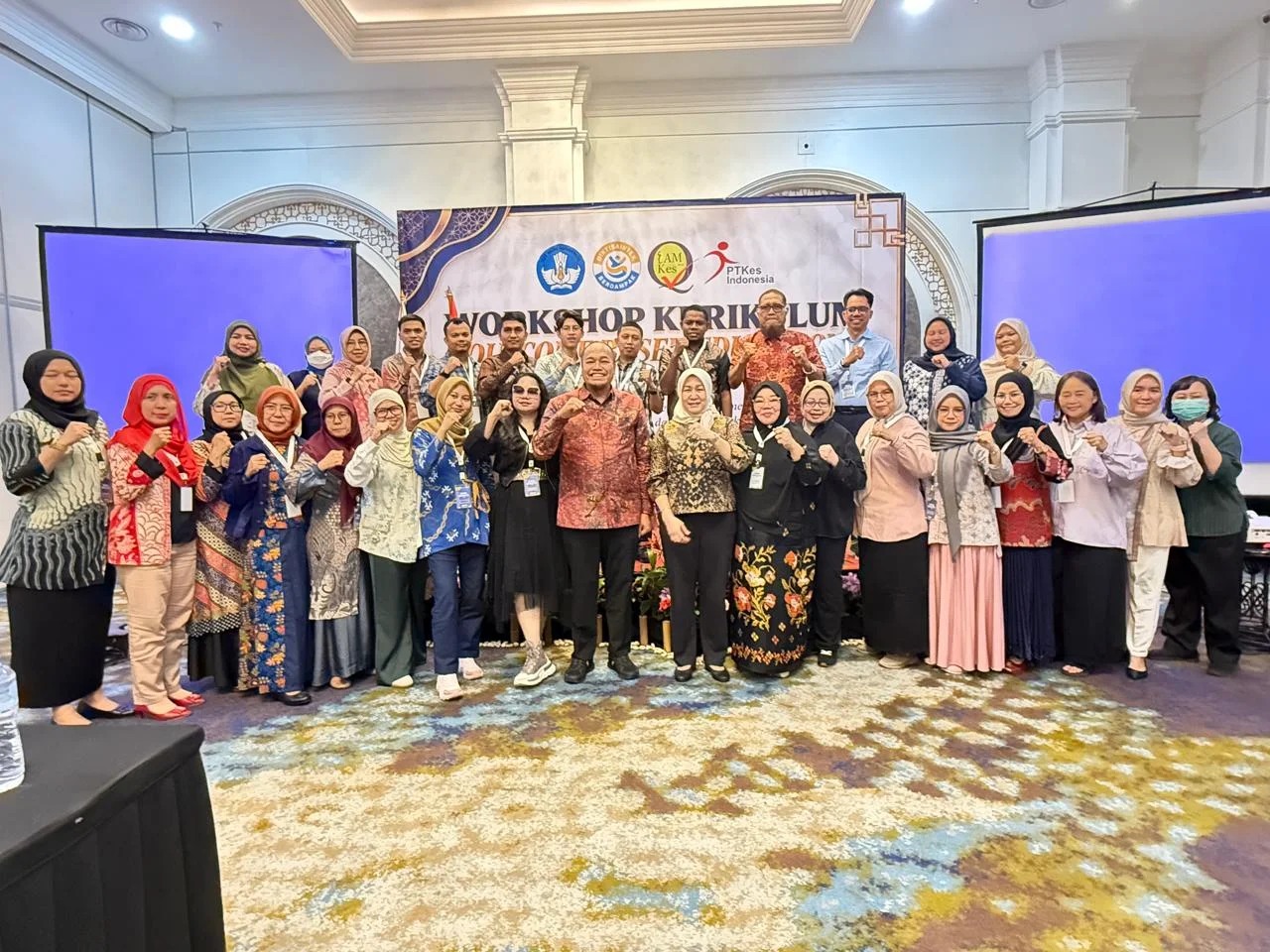
Jakarta – The Dean of the Faculty of Medicine at the Indonesian Muslim University (FK UMI), Dr. dr. H. Nasrudin Andi Mappaware, Sp.OG(K), Subsp. Obginsos, MARS, M.Sc., FISQua, AIFO-K, attended the Outcome-Based Education (OBE) Curriculum Workshop organized by the Association of Indonesian Health Universities (HPTKes Indonesia) on October 21–22, 2026, at the Tavia Heritage Hotel in Jakarta.
The event focused on the theme “Strengthening and Implementing an Outcome-Based Education (OBE) Curriculum to Improve the Quality of Learning and Prepare Higher Education Institutions for Accreditation.” The workshop was held to support improvements in the quality of higher education and to strengthen universities’ capacity to develop and implement learning outcomes-based curricula.
The Outcome-Based Education (OBE) curriculum is an educational approach that emphasizes the learning outcomes students must master upon completing their education. Its implementation requires targeted instructional planning, appropriate assessment methods, and a sustainable quality assurance system to ensure that the learning process aligns with the expected graduate competencies.
This workshop featured two main discussion topics: the development of OBE-based Semester Learning Plans (SLPs) and monitoring and evaluation (M&E) through the PPEPP and PDCA cycles, as well as accreditation. Both of these topics play a crucial role in supporting the development of a structured, measurable curriculum focused on improving the quality of higher education.
The development of OBE-based SLPs is a key aspect in ensuring alignment between graduate learning outcomes, course learning outcomes, the learning process, and assessment methods. With proper planning, learning activities are expected to provide relevant academic experiences and optimally support students’ achievement of competencies.
In addition, the discussion on monitoring and evaluation through the Setting, Implementation, Evaluation, Control, and Improvement (PPEPP) cycle, as well as the Plan-Do-Check-Act (PDCA) cycle, emphasizes the importance of consistently implementing a quality assurance system. Regular evaluations can serve as a basis for higher education institutions to identify areas for improvement, develop follow-up actions, and continuously enhance the quality of educational delivery.
The participation of the Dean of the UMI Faculty of Medicine in this activity is part of efforts to strengthen the institution’s capacity in curriculum development and the improvement of medical education quality. An understanding of OBE implementation, quality assurance systems, and accreditation requirements is expected to support the development of a more focused learning process that aligns with higher education quality standards.
Through participation in this workshop organized by HPTKes Indonesia, the UMI Faculty of Medicine is expected to continue strengthening its commitment to improving academic quality, developing a curriculum oriented toward learning outcomes, and implementing continuous evaluation. These efforts play a vital role in supporting high-quality medical education and producing graduates who are competent, professional, and capable of meeting the needs of society.