
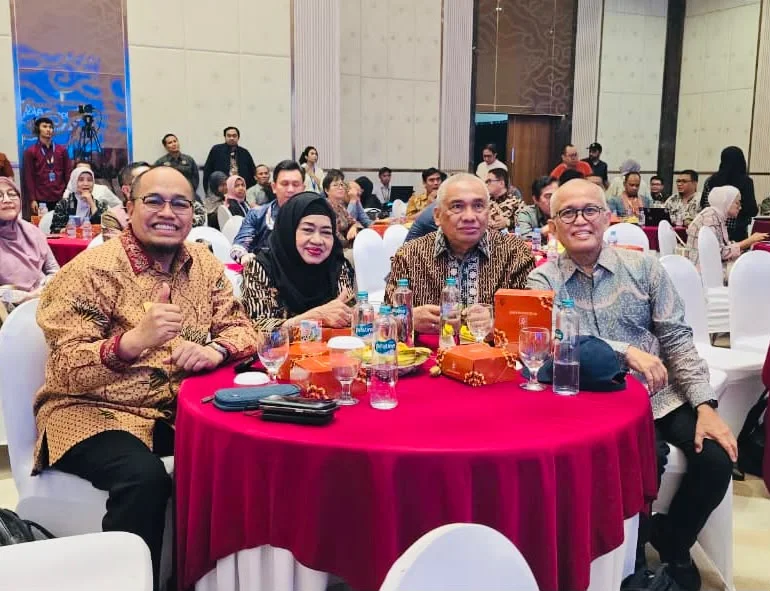
Jakarta – The Dean of the Faculty of Medicine at the Indonesian Muslim University (FK UMI), Dr. dr. H. Nasrudin Andi Mappaware, Sp.OG(K), Subsp. Obginsos, MARS, M.Sc., FISQua, AIFO-K, along with the leadership of the Indonesian Muslim University, attended a meeting of the Acceleration Program for Improving Access to and the Quality of Medical and Dental Education on Thursday, October 22, 2026.
The meeting was scheduled to take place from 2:00 p.m. to 3:30 p.m. WIB in the 2nd-floor auditorium of Building D at the Ministry of Higher Education, Science, and Technology (Kemdiktisaintek), Jalan Jenderal Sudirman, Gate 1, Senayan, Jakarta.
The program covers several strategic agenda items, including educational scholarships, an accelerated dental education program, and the placement of independent-level residents. These discussions are part of efforts to expand access to medical and dental education while supporting improvements in the quality of medical workforce education in Indonesia.
The presence of the Dean of the UMI Faculty of Medicine alongside the leadership of the University of Muslim Indonesia demonstrates the institution’s commitment to staying abreast of government policies and programs in the field of medical education. This participation also provided an opportunity to gain insights into the direction of medical education development, including opportunities for educational support and institutional capacity building.
One of the program’s focal points is educational scholarships aimed at expanding access to education. Financial support for education is expected to serve as a key tool for improving access to medical professional education, while taking into account existing needs and policies.
In addition, accelerating dental education is a priority in building the capacity of the healthcare workforce. These efforts address the need to increase both the number and quality of professionals capable of providing dental and oral health services to the public.
Another agenda item—the placement of independent-level residents—was also part of the discussions on the acceleration program. Policies regarding the placement and educational development of medical specialists play a crucial role in supporting the fulfillment of healthcare workforce needs and the equitable distribution of healthcare services across various regions of Indonesia.
For the UMI Faculty of Medicine, participation in this meeting is expected to strengthen understanding of medical education development programs and open avenues for coordination with relevant stakeholders. The information and policies discussed can serve as considerations for the institution in developing high-quality medical education that meets the needs of the community.
Through the involvement of UMI leadership in this meeting, Universitas Muslim Indonesia is expected to continue contributing to the strengthening of medical workforce education, the improvement of educational institution quality, and the development of human resources in the health sector. Synergy among universities, foundations, and the government is a key element in fostering a higher-quality and sustainable medical education system.