
Pangkep – The 110 Medical Assistance Team from the Faculty of Medicine at the Indonesian Muslim University (FK UMI) provided medical services to the joint team involved in the search and rescue operation following a plane crash in the Tompo Bulu subdistrict, Pangkajene and Islands Regency, Sunday (January 18, 2026).
Medical services were provided at one of the evacuation command posts from 3:00 p.m. to 10:00 p.m. WITA. The area is currently crowded with approximately 70 joint teams consisting of members of the Indonesian National Armed Forces (TNI), the Indonesian National Police (Polri), the National Search and Rescue Agency (Basarnas), and volunteers from various agencies involved in the search operation for victims.
According to information from the field, the crash site is located approximately 700 meters from the summit of Mount Bulu Saraung. As of Sunday afternoon, the joint rescue team had found aircraft debris and one victim near the fuselage. However, the victim’s evacuation could not yet be carried out due to limited access and extreme terrain conditions. The search is scheduled to resume the following day. The joint team also successfully located and secured the aircraft’s black box, which will be transported to the main command post.
During the operation, the UMI Faculty of Medicine Medical Assistance Team provided general health checkups and treated various ailments experienced by the rescue team, such as scrapes, muscle pain, headaches, and physical exhaustion following search activities in challenging terrain. A total of 65 members of the joint team received medical care, including those who had just returned from the search site and those preparing to continue the evacuation operation.
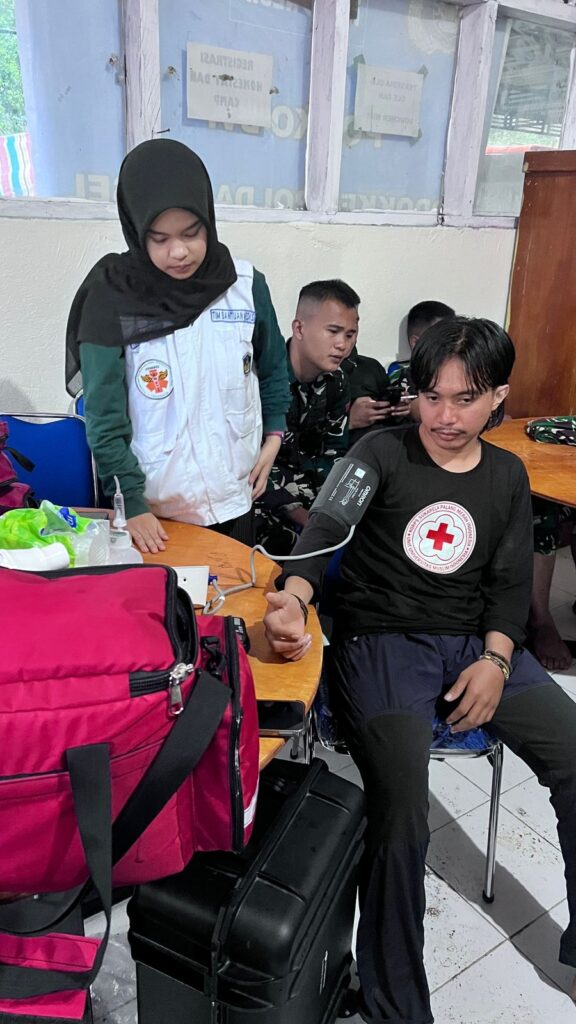
One of the cases treated involved a 20-year-old rescue team member who sustained a fairly deep scrape on his right knee after falling on steep terrain amid poor weather conditions and thick fog. The UMI Faculty of Medicine medical team, in coordination with field doctors, immediately cleaned the wound, applied antiseptic, and dressed the wound with sterile gauze.
In addition to providing medical care, the UMI Faculty of Medicine Medical Assistance Team also distributed medical consumables to TNI units stationed at the main command post as a form of medical logistical support.
Access to the evacuation command post was reported to remain quite challenging. The route to the location was steep, slippery due to moss, and narrow and damaged in several spots. The medical team was temporarily delayed en route due to a flow of evacuation vehicles and was only able to continue after receiving guidance from TNI personnel.
Field observations indicate that unfavorable weather conditions and extreme terrain are the primary obstacles in the search and rescue operations. The location of victims in valley areas also complicates the transportation process.
The UMI Faculty of Medicine Medical Assistance Team identified several urgent needs on the ground, including a shortage of medications due to the high number of patients and the need for additional medical personnel to reach all evacuation posts.
The UMI Faculty of Medicine’s involvement in this humanitarian operation underscores the institution’s commitment to supporting disaster response and emergency health services, particularly for personnel on the front lines of search and rescue operations.