
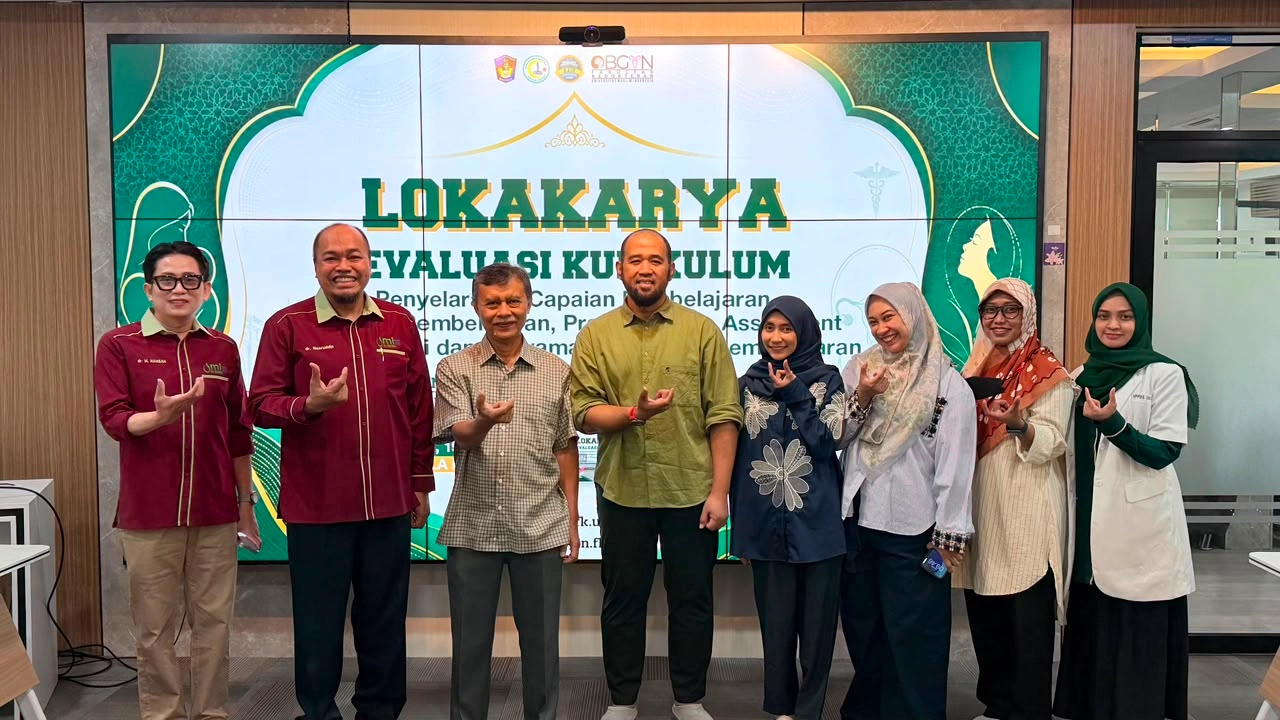
MAKASSAR – The Faculty of Medicine at the Indonesian Muslim University (FK UMI) held a Curriculum Evaluation Workshop for the Obstetrics and Gynecology (OB/GYN) Specialist Medical Education Program on Wednesday, August 19, 2026, at the UMI Faculty of Medicine campus. The event took place from 9:00 a.m. to 3:00 p.m. WITA.
This workshop is a crucial part of FK UMI’s efforts to evaluate and develop the OB/GYN residency program curriculum to ensure it remains relevant to advancements in medical science and technology, healthcare needs, and the competency requirements for future specialists.
Through this event, various aspects of curriculum implementation were comprehensively evaluated, ranging from the learning process, students’ competency outcomes, and educational methods to the curriculum’s alignment with specialist medical education standards.
Curriculum evaluation serves as a strategic step to ensure that the educational process within the UMI Faculty of Medicine’s OB/GYN Specialist Physician Education Program produces graduates who possess professional competence, integrity, adaptability to advancements in medical science, and the ability to provide high-quality healthcare services to the community.
In addition to serving as a forum for evaluation, this workshop also provided an opportunity to gather various inputs and ideas from relevant stakeholders to further refine the curriculum. The evaluation results are expected to serve as the foundation for developing a curriculum that is more effective, measurable, and focused on improving the quality of education.
This activity aligns with the UMI Faculty of Medicine’s commitment to maintaining and improving the quality of specialized medical education and strengthening a sustainable educational system. Curriculum development that is responsive to change is a crucial component in realizing an excellent and competitive specialized medical education program.
Through this workshop, the UMI Faculty of Medicine hopes that the Obstetrics and Gynecology Specialist Medical Education Program will continue to develop and contribute to producing competent, professional specialists who are committed to improving the quality of public health.