
Makassar, June 14, 2025 – The Faculty of Medicine (FK) at the Indonesian Muslim University (UMI) has once again reaffirmed its dominance as a center of excellence in private medical education in Indonesia. On the occasion of its 33rd anniversary, FK UMI was entrusted to host the 22nd National Conference (Munas) of the Association of Indonesian Private Medical Faculties (AFKSI) in 2025—a prestigious honor granted only to institutions that have proven excellence in quality and governance.
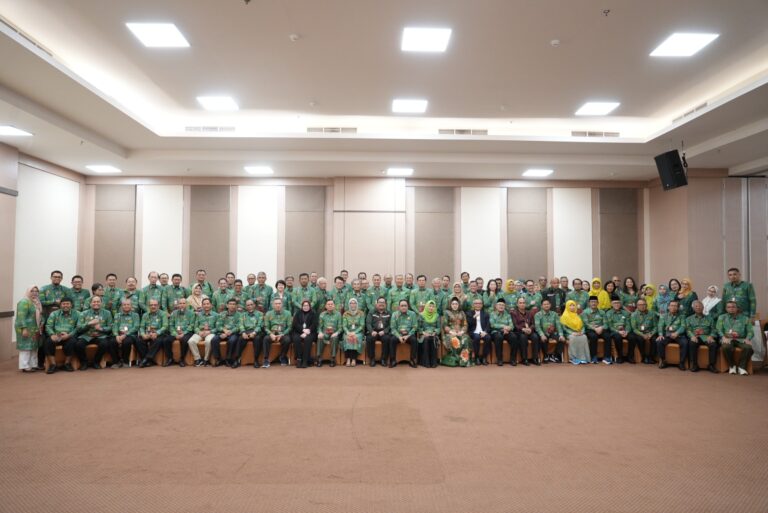
One of the most significant events on the agenda for this year’s National Congress is the Foundation and Rectors’ Forum Gathering, which took place in grand style at Maraja Hall, Hotel Rindra, Makassar, on Saturday, June 14, 2025. This forum served as an elite gathering to bring together foundation administrators, university leaders, and deans of private medical faculties from all corners of Indonesia—to discuss major strategies for the future development of private medical institutions.
The presence of national figures added significance to the forum, including the Chairman of the AFKSI Central Board, Dr. dr. H. Artha Budi Susila Duarsa, M.Kes., as well as foundation chairpersons, university presidents, and deans of medical faculties from various renowned universities. Representing the host institution, UMI, were its top leadership: Chairman of the YW-UMI Board of Trustees Prof. Dr. H. Mansyur Ramly, SE., M.Si; Chairwoman of the YW-UMI Executive Board Prof. Dr. Hj. Masrurah Mokhtar, MA; UMI Rector Prof. Dr. H. Hambali Thalib, SH., MH., and Dean of the UMI Faculty of Medicine Dr. dr. Nasruddin AM, Sp.OG(K), MARS., M.Sc., FISQua., AIFO-K.
At this forum, the Indonesian Muslim University (UMI) received waves of praise from National Congress participants for its expertise in managing the institution in a systematic, visionary, and Islamic-values-based manner. UMI did not merely serve as the host; rather, it has emerged as a new icon of governance in medical higher education in Indonesia.
The Chairman of the AFKSI Central Board, Dr. Artha Budi, openly expressed his appreciation: “This is the first time in the history of the AFKSI National Congress that we have held a forum bringing together the Foundation, the Rector, and the Deans of the Medical Faculties simultaneously. UMI’s Faculty of Medicine has not only successfully hosted the event but has also facilitated a strategic forum that serves as a historic stepping stone for the advancement of private medical faculties in Indonesia.”
He emphasized that this forum format will serve as a national model because it offers a concrete, collaborative approach to aligning the management direction between the foundation and university administration.
The presentation by the Chair of the YW-UMI Board of Trustees, Prof. Dr. H. Mansyur Ramly, SE., M.Si., on the management strategy of the UMI Waqf Foundation was one of the most inspiring sessions. He emphasized the importance of the foundation as a strategic actor—not merely an administrative body, but a visionary one that serves as the primary driving force behind the institution’s progress.
“The foundation is not merely a behind-the-scenes administrator. An ideal foundation is a true partner to the rector and the faculties in designing a resilient future for higher education that is responsive to the times,” he asserted in a presentation that resonated deeply with many forum participants.
Not only that, but the forum also sparked tremendous interest from various other private universities, which openly proposed a benchmarking program with UMI to learn firsthand about the governance of the Waqf Foundation that successfully supports an excellent academic system.
One forum participant remarked directly, “Prof. Mansyur’s presentation was truly inspiring. It shed light on how a harmonious relationship between the foundation and university management can foster a resilient, competitive, and integrity-driven institution.”
The 2025 AFKSI National Conference, hosted by UMI’s Faculty of Medicine, not only made history but also became a national landmark in the synergy and development strategies of private medical faculties. UMI did not merely act as a facilitator but rose to become an icon of reform in the governance of medical higher education—based on quality, collaboration, and Islamic values.